Word of Mouth Didn't Die — It Moved Online: What 15 Customers Taught Us About Discovery
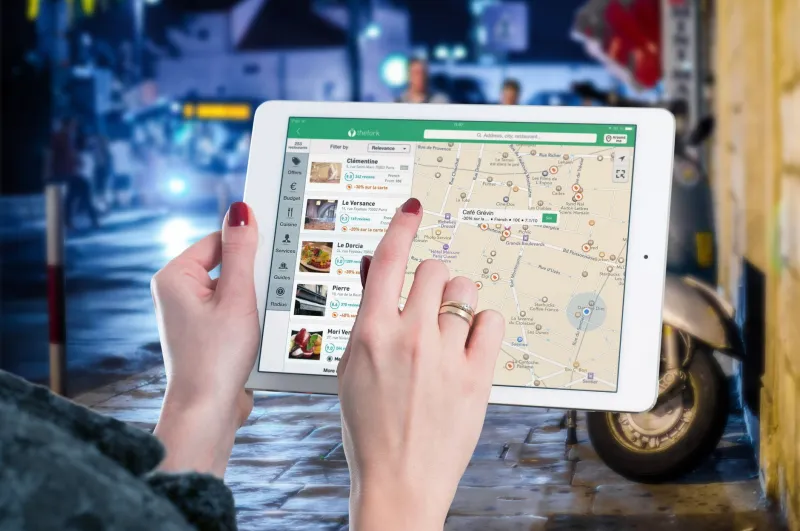
We ran an unscientific experiment last month. We asked fifteen people — friends, neighbors, a few folks waiting in line at a hardware store in Ohio — one question: "How did you find the plumber (or electrician, or dentist) you use?"
Nobody said "backlinks." Nobody said "domain authority." Nobody even said "Google search," not exactly.
Here's what they actually said:
- "My neighbor mentioned him, so I looked him up on my phone." (4 people)
- "He was the top result on the map thing." (3 people)
- "Siri found someone close by." (2 people)
- "Their reviews on [Yelp/Google] were good." (3 people)
- "I saw their truck at my church." (1 person)
- "The Angi listing, I think?" (2 people)
Fifteen answers. Zero mentions of anything that lives in an SEO dashboard.
The Gap Between What We Optimize and What They Do
Here's what struck us: nearly every answer involved looking someone up after hearing about them, or checking a map when the need got urgent. The discovery happened in one of two moments — a recommendation from a human, or an urgent "who's nearby" search.
And in both moments, what closed the deal was the same stuff: a complete profile, decent reviews, correct hours, photos that looked like a real business.
That's not ranking. That's something else. We've started calling it the discovery stack — the layers a customer passes through between "I need someone" and "I'm calling."
The Discovery Stack, Layer by Layer
Layer 1: The recommendation. Word of mouth, online or off. You can't buy it, but you can make it easier to act on.
Layer 2: The map. Google Maps, Apple Maps, voice assistants. This is where "my neighbor mentioned him" becomes a tap-to-call. If your listing is thin or wrong, the recommendation dies here.
Layer 3: The verification. Reviews, photos, website, directories. The customer is looking for one thing: proof you're real and competent.
Layer 4: The contact. Phone number that works, hours that are right, a form that doesn't feel like a loan application.
Notice what's missing? Nobody in our fifteen said "I compared their blog content." Nobody cared who had more referring domains.
Where Submissions Fit in 2025
Here's the part that matters for owners: directories and citations sit in layers two and three of that stack. They're not magic ranking juice. They're the plumbing that makes sure when a customer arrives — via map, voice search, or a friend's recommendation — they find accurate info and enough social proof to call.
A listing on a trusted directory is a verification checkpoint. It's one more place a skeptical customer can confirm you're legit. It feeds the maps and, increasingly, the AI assistants that answer "who fixes water heaters near me."
That's a humbler job description than "backlinks," but it's an honest one.
What To Do With This
Three practical takeaways from fifteen conversations:
- Make yourself easy to recommend. A clean, complete, findable listing turns "my neighbor mentioned him" into a phone call. Consistency across the web is the multiplier on word of mouth.
- Win the map moment. Urgent searches are won by proximity plus profile completeness, not by link count. Your Google Business Profile and your top directory listings are the whole game there.
- Stop optimizing for the meeting; optimize for the customer. If a tactic doesn't help a real person find you, verify you, or contact you, it's probably theater.
Fifteen people is a small sample. But the pattern was unanimous enough to be a thesis: customers don't experience your SEO. They experience your discovery stack. Build the stack, and the rankings tend to follow. Build for rankings alone, and you might win a keyword nobody's customer ever types.